
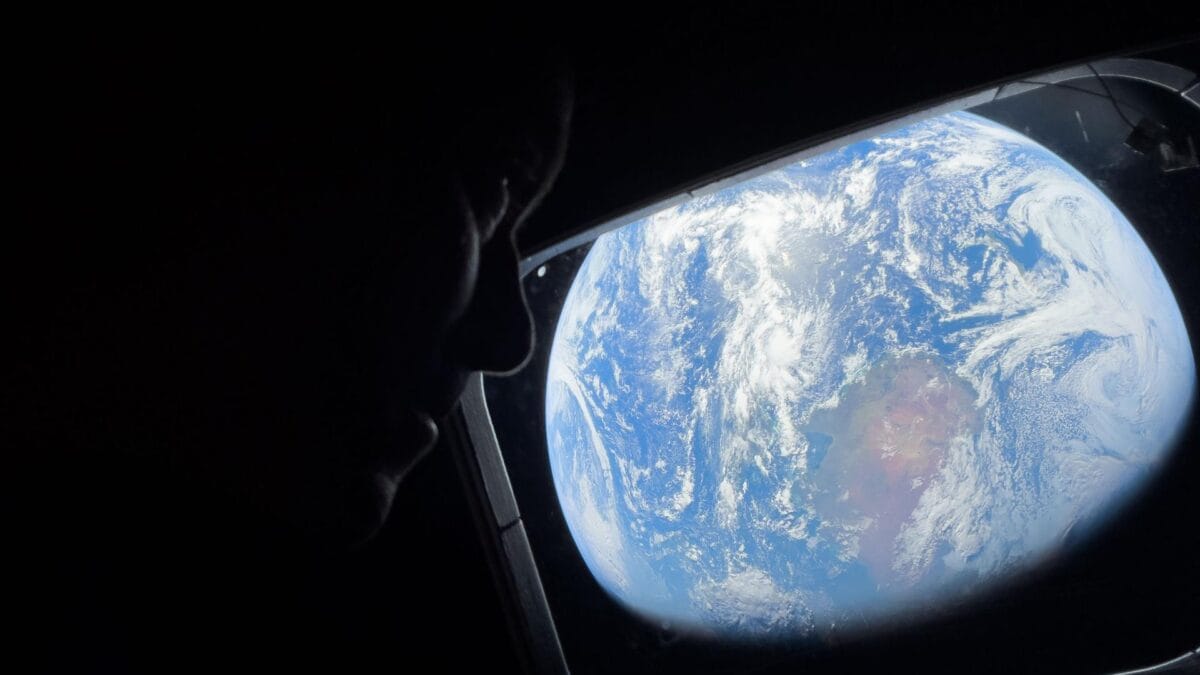
NASA has released a new set of images from its ongoing Artemis II mission, offering a rare view of Earth from deep space. Notably, some of these images were captured using a consumer smartphone — the iPhone 17 Pro Max — marking a significant moment in space mission documentation.
The Artemis II mission, currently en route to the Moon, is the first crewed lunar mission in more than five decades. As part of its documentation efforts, astronauts aboard the Orion spacecraft have been using both professional cameras and smartphones to capture visuals of their journey.
Smartphones Used Alongside Professional Equipment
NASA confirmed that astronauts carried iPhone 17 Pro Max devices primarily for capturing photos and videos of life inside the spacecraft and views of Earth. These smartphones were not used for any mission-critical operations but served as supplementary tools for documentation.
Traditional equipment, including Nikon cameras and GoPro units, remains the primary system for high-resolution and scientific imaging. However, the inclusion of smartphones highlights a shift toward integrating compact, high-performance consumer technology into space missions.
A New Perspective from Space
Among the released images are striking visuals of Earth seen through the Orion spacecraft’s windows, as well as photographs of astronauts observing the planet from orbit. Some of these images, captured on the iPhone, offer a more personal and human perspective compared to traditional mission photography.
NASA officials noted that modern smartphones now possess camera capabilities strong enough to complement professional equipment, especially for quick documentation and informal captures during missions.
Rigorous Approval Before Space Use
Before being approved for the mission, the smartphones underwent strict safety evaluations. NASA assessed potential risks such as overheating, battery issues, and material safety under space conditions before allowing the devices onboard.
Despite being consumer devices, the phones are being used in a limited capacity — without network connectivity and strictly as standalone imaging tools.
Significance for Future Missions
The use of smartphones in Artemis II signals a broader shift in how space missions may be documented in the future. By combining traditional imaging systems with advanced consumer technology, space agencies can capture both technical data and human experiences more effectively.
The Artemis II mission itself is a key step in NASA’s long-term plan to return humans to the Moon and eventually enable deeper space exploration.