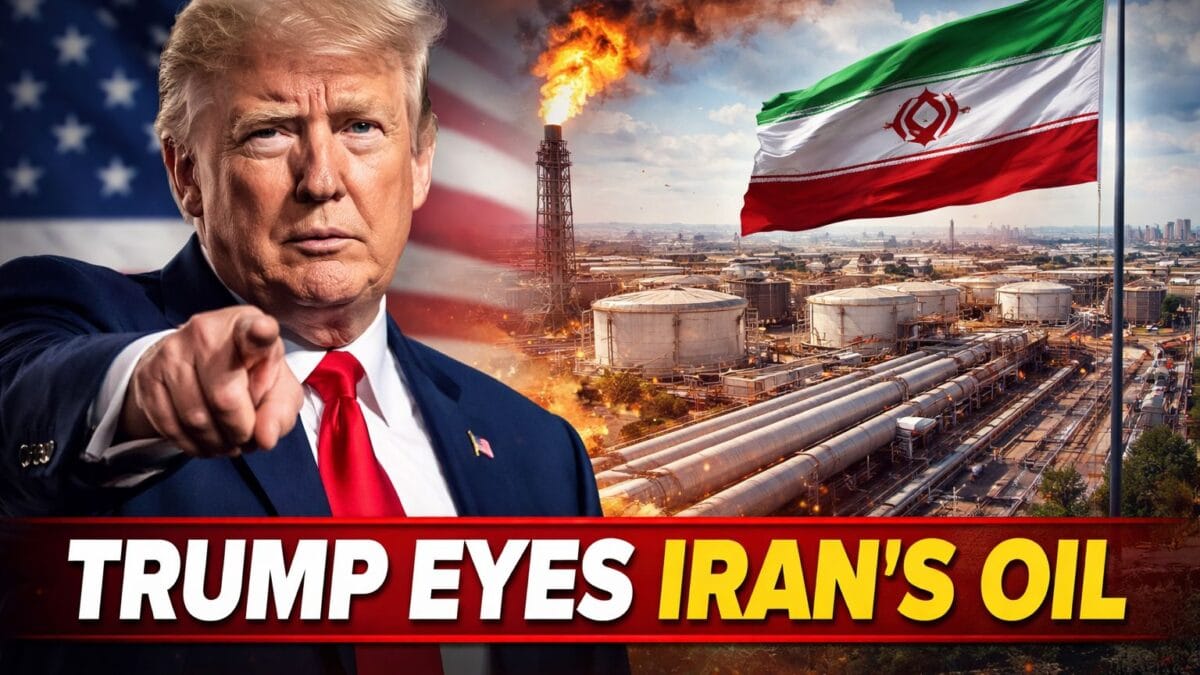
Tensions in the Middle East appear to be taking a sharper turn after former U.S. President Donald Trump indicated that seizing Iran’s oil resources could be an option — a statement that has quickly drawn global attention.
Speaking recently, Trump suggested that one of his preferred strategies would be to “take the oil in Iran,” a remark that analysts believe points directly to Kharg Island, Iran’s most important oil export hub. While no official plan has been announced, even the suggestion has raised serious questions about what could come next.
🔍 Why Kharg Island Matters
Kharg Island isn’t just another location on the map. It handles the bulk of Iran’s crude oil exports and plays a central role in keeping the country’s economy running.
Because of its importance, any disruption — whether through conflict or control — could have immediate consequences, not just for Iran, but for global oil supply as well.
⚠️ A Region Already Under Pressure
Trump’s remarks come at a time when the region is already on edge. Ongoing tensions involving Iran, Israel, and U.S.-aligned forces have created a fragile situation, with military movements and warnings becoming more frequent.
There are growing concerns that even strong rhetoric could escalate into something more serious. For many observers, this is less about a single statement and more about the direction things seem to be heading.
🛢️ Oil Markets Watching Closely
Unsurprisingly, energy markets are reacting. Oil prices have shown signs of volatility as traders try to assess the risk of disruption in one of the world’s most critical oil corridors.
The Strait of Hormuz — through which a significant portion of global oil passes — is already considered a sensitive route. Any escalation involving Iran could tighten supply and push prices higher.
🌍 What It Could Mean Globally
If tensions were to escalate further, the impact would likely go far beyond the region. Higher oil prices, shipping disruptions, and broader geopolitical instability could affect economies worldwide.
At the same time, experts caution that statements like these are often part of a broader political strategy. Whether they translate into action remains uncertain.
🧠 The Bigger Picture
For now, there is no immediate indication of a concrete move toward seizing any territory. However, the tone of the conversation has clearly shifted.
What happens next will depend on how both sides respond — and whether diplomacy can keep the situation from escalating further.