
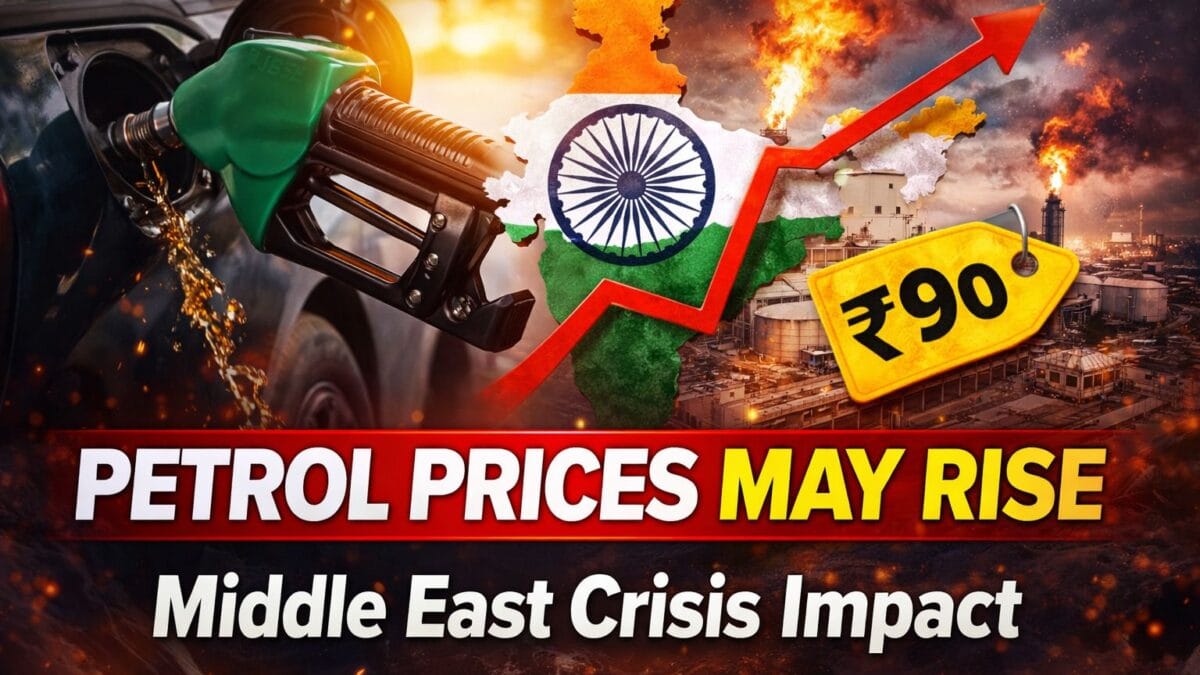
Fuel prices in India could soon see an upward movement as tensions in the Middle East continue to escalate, raising concerns over global oil supply and stability.
Over the past few days, crude oil prices in the international market have shown signs of volatility, driven by growing uncertainty in the region. Since India imports a large portion of its crude oil, any disruption in supply chains or increase in global prices directly impacts domestic fuel rates.
🛢️ Why Prices May Increase
The Middle East remains one of the most important oil-producing regions in the world. With rising geopolitical tensions involving key players, fears of supply disruption have pushed oil markets into a sensitive zone.
A major concern is the Strait of Hormuz, a crucial route through which a significant percentage of global oil passes. Any instability in this area can tighten supply and push prices higher globally.
Experts believe that even a slight increase in crude oil prices could lead to a noticeable rise in petrol and diesel rates across India.
🇮🇳 Impact on Indian Consumers
For Indian consumers, rising fuel prices often lead to a chain reaction:
- Increase in transportation costs
- Higher prices of goods and services
- Pressure on household budgets
If global oil prices continue to climb, consumers may start feeling the impact within days or weeks.
📈 Current Market Situation
Oil prices have already shown an upward trend in recent sessions, with investors closely watching developments in the Middle East.
Market analysts suggest that if tensions persist, crude oil could remain volatile, keeping fuel prices under pressure.
⚠️ What to Expect Next
While oil companies in India revise fuel prices based on global trends and currency fluctuations, the situation remains uncertain.
If geopolitical tensions escalate further, a price hike in petrol and diesel could become unavoidable.
For now, consumers and markets alike are keeping a close watch on global developments.